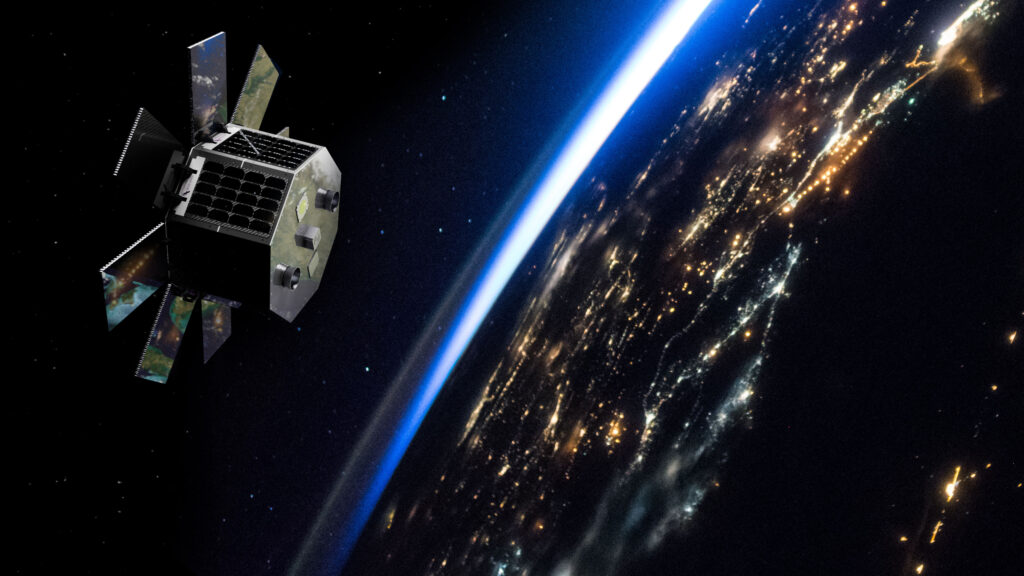
LOGAN, Utah — Sidus Space could pivot to launching LizzieSat-1 on a rideshare mission if it can’t get safety clearances in time to deploy its first satellite from the International Space Station early next year.
It is unclear if Sidus can get all NASA approvals to add operational-life-extending thrusters to LizzieSat-1 for a cargo trip to the ISS in February, Sidus chief mission operations officer John Curry said Aug. 8.
Sidus currently still plans to launch on the ISS, and could remove the thruster to pass through safety approvals faster.
“It’s possible we may end up deciding not to fly the thruster” Curry said during the Small Satellite Conference in Logan, Utah, so that it can “just get through the safety process and go ahead and fly.
“It’s not that we can’t get past that, but it takes a long time.”
LizzieSat-1 was previously slated to launch on a mission to the ISS in October before NASA re-manifested it to February.
It is the first of 100 satellites Sidus is planning for a constellation that would initially provide in-orbit testing services.
The 100-kilogram spacecraft had been set to use a deployer on the ISS that Sidus manages as part of its existing government contractor business.
If deployed from the ISS without thrusters, Curry said LizzieSat-1 would only provide services for around 130-200 days before losing operational altitude.
While that would still be enough time to demonstrate core technology, he said its satellites with thrusters could last 18 months to three years depending on mission requirements.
LizzieSat-1’s customers include NASA and Mission Helios, a financial services startup that aims to test technology for NFTs.
These and other future customers don’t care about the length of time they spend on orbit, Curry said, and a LizzieSat without thrusters has more room for payloads.
However, a LizzieSat with thrusters is the standard design for the company’s constellation and would enable more control over the satellite’s de-orbit trajectory.
Curry said the rideshare mission Sidus has eyes on would launch after the Feb. 19 ISS Cargo mission it had been targeting, but would still fly within the first quarter of 2023.
Getting to LEO on a rocket would likely deliver the satellite to orbit faster than via the ISS, where Curry said it would take astronauts 30-60 days to deploy the spacecraft once it arrived on the station.
For an ISS launch, he said NASA also requires delivery of a “fully outfitted” satellite 10 and a half weeks before launch, compared to four weeks for a rideshare mission.
That means using rideshare providers for future satellites would give customers more time to provide the payloads they want to test on LizzieSat satellites. It would also guard against the possibility of supply chain delays.
Sidus is negotiating with “a number of different providers” for launching other LizzieSats later in 2023.